
ERP Therapy in Nashville for OCD
Support for intrusive thoughts, compulsions, rumination, and the exhausting cycle of OCD
If you’re here, you’re probably running on empty
Maybe you've been at this for years. Maybe it's been months and it already feels like too long. Either way, you're tired of the rituals, the checking, and the thoughts that loop no matter how many times you try to push them away. You want to be done explaining yourself to people who don't get it and feeling like you're the only one whose brain works this way.
You're not alone. And you're not broken.
There’s a reason your tools aren’t working
Most people with OCD are really good at one thing: trying to solve the problem with thinking. You've probably Googled, analyzed, asked for reassurance, run through every possible scenario in your head. And somehow, the more you try to figure it out, the worse it gets because OCD is a loop, not a puzzle.
What ERP is (and isn't)
ERP stands for Exposure and Response Prevention. It's a mouthful, but the idea is simple: we help you gently, gradually face the things that scare you, and we help you stop doing the compulsions that keep the OCD in charge.
It's not about being thrown into your worst fear on day one. It's not about white-knuckling through panic. It's about building a ladder, one rung at a time, and you decide when you're ready for the next step.
ERP is the approach that decades of research point to as the most effective treatment for OCD. Not because it makes the thoughts disappear, but because it helps your brain learn that the thoughts don't have to control you.
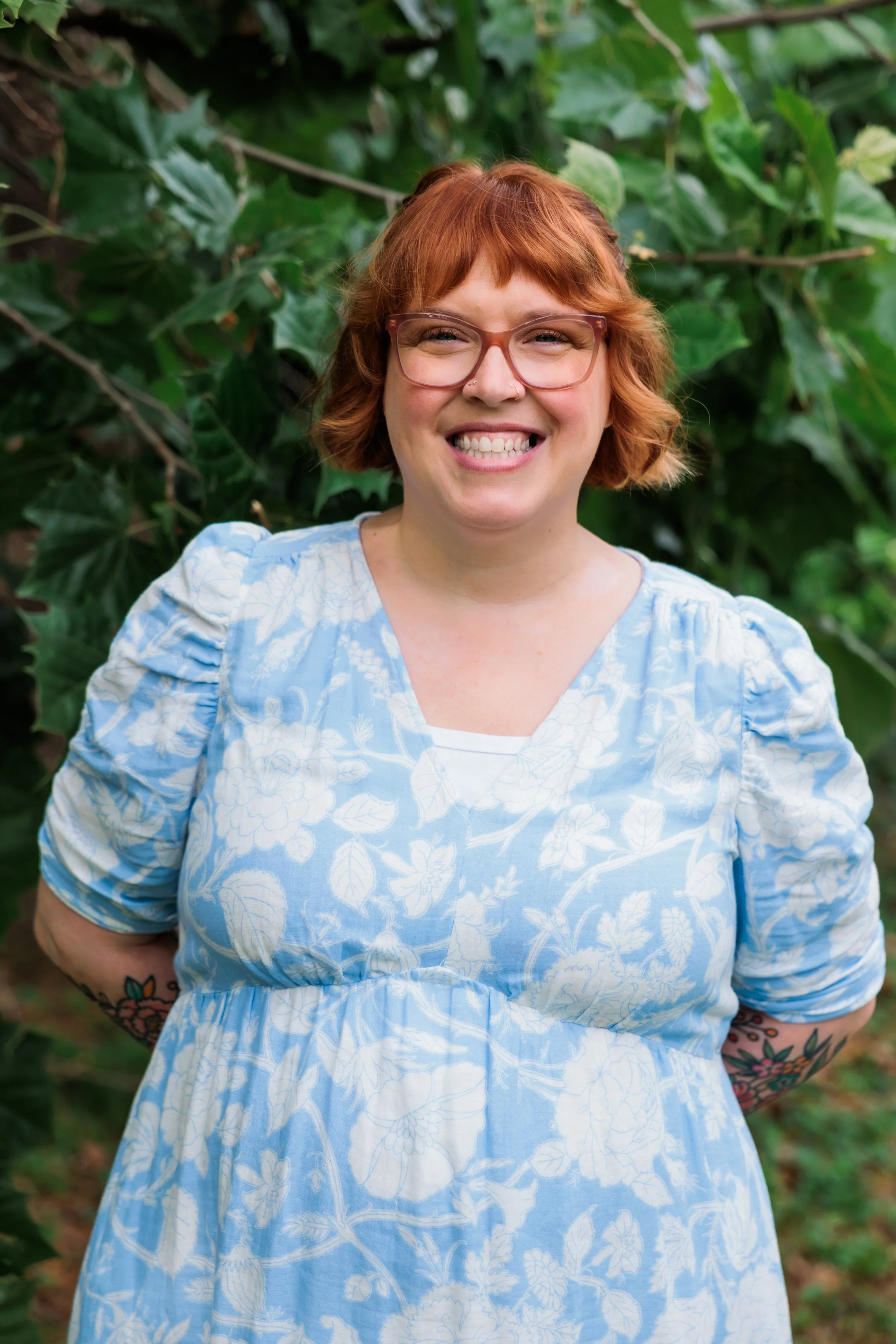
Whether you’re struggling with intrusive thoughts, compulsions, rumination, or the constant need for reassurance, Julie can help you break free from the exhausting cycle of OCD. In this work, there’s no judgment about the thoughts that scare you, and no expectation that you should be able to simply “stop thinking about it” or reason your way to certainty.
Julie is an associate-licensed therapist specializing in OCD and Anxiety. She works with adults in Nashville and across Tennessee via telehealth.
We work with all kinds of OCD
The theme doesn't really matter to us — what matters is the pattern. Whether you're dealing with:
Fears about contamination or germs
Checking doors, stoves, locks, or your own body
Intrusive thoughts that feel disturbing or shameful
Fear that you might hurt someone or that something bad will happen
Religious or moral scrupulosity
Needing things to feel "just right"
Constant doubts about your relationship, your health, or your identity
...the work is the same. And you don't have to share every detail before you're ready.
What if looks like to work together
First, we talk. Your therapist will ask a lot of questions to help them understand how OCD has set up shop in your life. They’ll figure out your triggers, your compulsions, and where it makes sense to start.
Then we start practicing. You'll be learning skills, facing fears in small doses, and building confidence that you can handle discomfort without fixing it.
It's hard work, but so is living with untreated OCD.
An Example of ERP
Let's say you have a fear of contamination. Maybe you worry that touching a doorknob in public could make you or someone you love sick. Right now, you might avoid certain doors, wash your hands until they're raw, or replay the moment in your head to make sure you didn't touch anything "bad."
In ERP, we wouldn't start by making you grab a public doorknob and then sit with the panic. That's not how it works.
Instead, we'd start small. Maybe we'd look at a picture of a doorknob together and notice what comes up, like the urge to wash, the spike in anxiety, the thought that says "you're unsafe." We'd sit with that feeling for a minute, without doing anything to fix it. And then we'd notice that the feeling eventually settles all on its own.
Next session, maybe we'd stand near a door. Then touch a door you already know is clean. Then a door in the office building. Each step, you're in control. You decide when you're ready to move up the ladder.
And the whole time, you're not just white-knuckling through it. You're teaching your brain that discomfort isn't danger and that you can handle more than your OCD tells you.
FAQ’s about ERP Therapy
-
Not really. Talk therapy can actually feed OCD by giving you more space to analyze and seek reassurance. ERP is more about doing than talking. You'll learn to respond to your thoughts differently, not just talk about them.
-
Everyone's different, but most people start feeling a shift within a few months. The relief of finally understanding what's happening in your brain often comes even sooner.
-
We do not bill insurance directly, but many insurance plans offer out-of-network reimbursement benefits. This means your plan could reimburse you for up to 80% of session fees. Use this tool to see what your cost would be with each of our therapists: https://eligibility.thrizer.com/healing-house-nashville
View our ERP specialist’s bio page to see her current rates.
Our therapists offer sliding scale sessions as they are able. We cannot guarantee this option will be available and it must be discussed before scheduling an appointment. Please mention this in our contact form if needed.
-
We work with people who are terrified to say their thoughts out loud. We understand that there is a huge difference between an intrusive thought, which is distressing because it is not aligned with who you are, and an urge, which would not be distressing in the same way. Intrusive thoughts are a symptom, not a reflection of who you are.
-
If you've done talk therapy for OCD, that might be why. ERP is a completely different animal. Many people who felt like therapy didn't work just hadn't found the right approach yet.
Getting started
You don’t have to explain everything perfectly. “I’m having thoughts I can’t get rid of,” is more than enough.
Contact us or use our easy online scheduling tool to book a free consultation or your first appointment for OCD therapy in Nashville, TN or through telehealth across Tennessee.
Want to learn more about the OCD specialist you’d be working with? View Julie’s Bio.